Fuel-Saving Parts for European Cars are no longer just a maintenance detail for UAE drivers — they are quickly becoming one of the smartest ways to control ownership costs in a market shaped by stricter EU emissions rules, tighter engine technology, and rising oil prices. European manufacturers are under intense pressure to meet the EU’s 2025–2029 fleet CO2 targets of 93.6 g CO2/km for cars and 153.9 g CO2/km for vans, with the rules built around a 15% reduction from 2021 levels. Although the EU introduced added flexibility by allowing compliance to be averaged across 2025 to 2027, the message to carmakers is still very clear: build cleaner, more efficient vehicles or pay the price.

For drivers in the UAE, this European policy story matters more than it may seem at first glance. Cars built to meet these tighter regulations are increasingly designed with downsized turbocharged engines, highly precise fuel injection, stricter airflow control, and a greater dependence on sensors and filtration systems. Bosch notes that downsizing and turbocharging help reduce fuel consumption and CO2 emissions while maintaining performance, and MAHLE highlights that tighter packaging and growing emissions demands have made airflow and thermal management more critical than ever. In simple terms, modern European cars are engineered to be far more exact than older models. That precision can be a huge advantage for fuel economy — but only when the right parts are working properly.
At the same time, the financial pressure on drivers is rising. Reuters reported that Brent crude closed at about $109.03 per barrel on April 2, 2026, after jumping nearly 8% in one day, while another Reuters report said analysts raised their 2026 Brent forecast to $82.85, nearly 30% higher than the previous month’s estimate. That means every small drop in fuel efficiency now hurts more than before. A clogged filter, a weak oxygen sensor, poor tyre pressure, or a struggling fuel delivery component may not seem urgent in the moment, but over weeks and months, those issues quietly become extra money burned at the pump.
The old approach to maintenance was often reactive: if the car still started, drove, and did not show a major fault, many owners delayed parts replacement. That approach is becoming more expensive. Today’s European engines operate in much narrower efficiency windows. They are built to squeeze more power and lower emissions from smaller, more stressed powertrains. That makes supporting parts — especially filtration, sensors, and fuel system components — far more important than many owners realize.
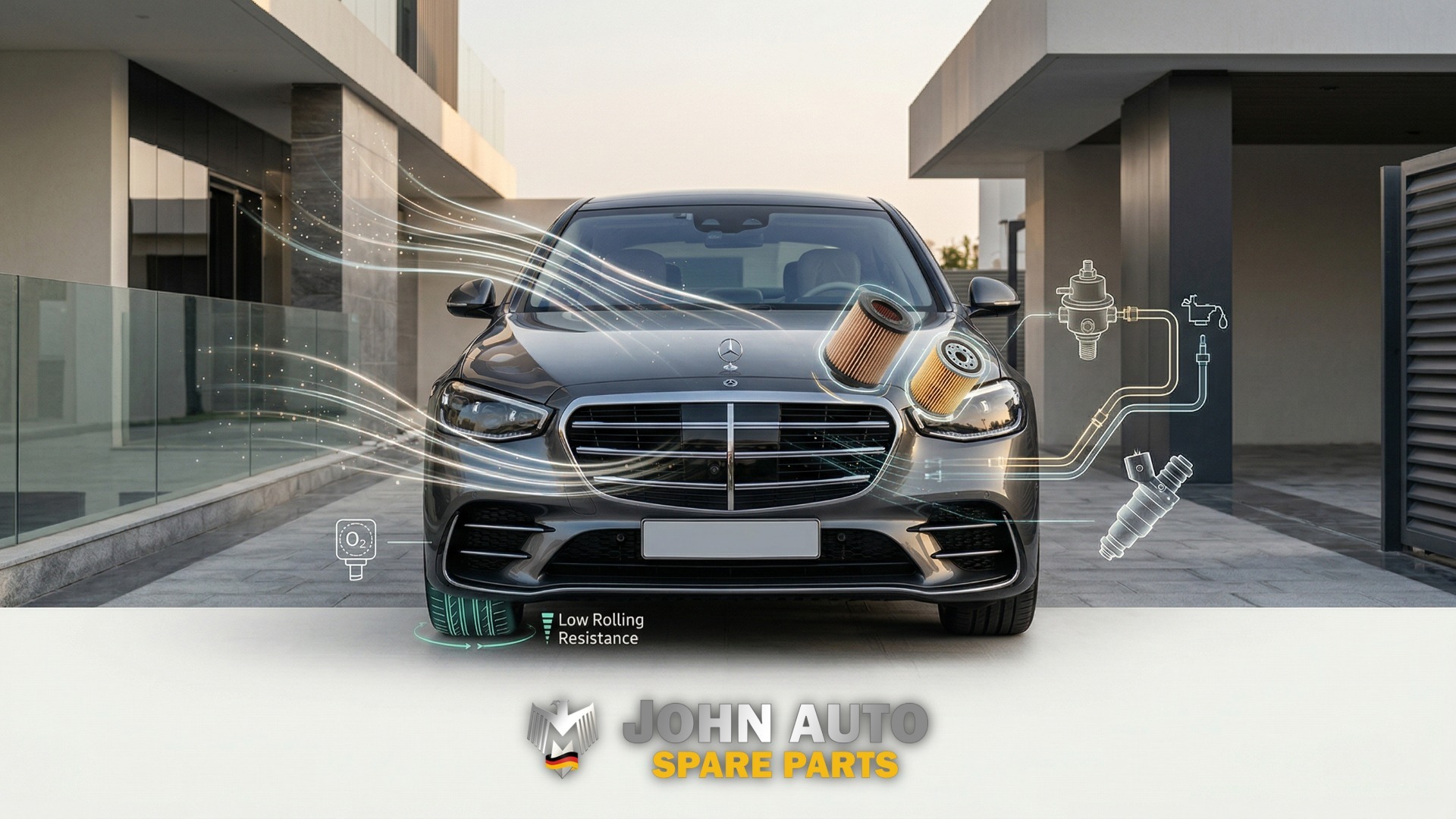
Take the air filter as an example. It seems simple, but it directly affects combustion quality. Bosch states that a clogged air filter can lead to increased fuel consumption, reduced engine power, and higher pollutant emissions. MAHLE also notes that modern air management systems are designed to deliver maximum filtration and optimal flow in increasingly compact engine bays. In practical terms, when an air filter is neglected, the engine may not breathe as efficiently as it was designed to, forcing the system to work harder and burn more fuel.
The same goes for the fuel filter. Modern injection systems demand extremely clean, homogeneous, free-flowing fuel. MAHLE explains that high-quality fuel filters protect the system from tiny contaminants and corrosion damage, helping assure efficient operation. In a European car, that matters because injectors and fuel delivery systems are not only expensive — they are also central to fuel economy. If fuel flow becomes inconsistent or contamination affects injector performance, the vehicle may lose efficiency long before a major repair issue becomes obvious.

Then there are the engine management sensors, especially oxygen sensors and airflow-related sensors. These are some of the most valuable fuel-saving parts in the entire vehicle. Bosch indicates that modern gasoline sensors can provide up to 15% fuel savings, and oxygen sensors are essential for accurate air-fuel mixture control. When a sensor begins to read poorly, the engine control unit may compensate incorrectly, often by enriching the mixture more than necessary. That means more fuel is used, emissions increase, and performance may feel less sharp even before the driver notices a warning light.
For UAE drivers, tyres also deserve much more attention in any fuel-saving conversation. The U.S. Department of Energy says that when all four tyres are at 75% of recommended pressure, fuel economy is typically 2% to 3% lower. The European Commission also notes that low tyre pressure increases fuel consumption and that the tyre label exists partly to help consumers identify more efficient tyre options. Continental adds that tyres account for roughly 20% to 30% of fuel consumption in combustion-engine vehicles, which shows how important rolling resistance and pressure really are. If your car feels heavier, less responsive, or starts using more fuel on familiar routes, tyre pressure and tyre quality should be among the first things you check.
If the goal is to lower fuel costs and avoid unnecessary repairs, there are a few areas that deserve priority.
First, invest in quality air filters and fuel filters. These parts are relatively affordable compared with the cost of wasted fuel or damaged injection components. Good filtration helps the engine maintain the airflow and fuel cleanliness it was calibrated for.
Second, do not ignore oxygen sensors, air-mass sensors, and other fuel-control sensors. Many drivers think of sensors only when a dashboard light appears, but in reality, sensor performance can deteriorate gradually. A vehicle may still run, but it may no longer run efficiently.
Third, pay attention to fuel system components such as injectors, fuel pumps, and pressure-regulation-related parts. In modern European cars, precise fuel delivery is part of what makes smaller engines feel strong while staying efficient. Once that precision slips, fuel savings slip with it.
Fourth, choose the right tyres and keep them properly inflated. It is one of the simplest and most overlooked ways to reduce fuel waste, especially for drivers who spend long hours on highways across the UAE.
Finally, insist on quality parts instead of simply buying the cheapest available option. On older vehicles, cheap substitutes sometimes seemed acceptable. On newer European cars, poor-quality filters or inaccurate sensors can cost more in the long run by reducing efficiency, causing uneven performance, or shortening the life of related components.
The biggest lesson from Europe’s fuel-efficiency push is that modern cars are becoming more advanced, but also less forgiving. The tighter the engineering, the more important every supporting part becomes. What used to be a “small service item” is now often a direct contributor to fuel economy, engine smoothness, and long-term running cost.
For car owners in the UAE, this should be seen as good news as well as a warning. The good news is that fuel savings are still achievable — often without changing the vehicle itself. In many cases, real savings come from restoring efficiency through the right maintenance parts: clean filtration, accurate sensors, healthy fuel system components, and efficient tyres. The warning is that delaying those replacements now costs more, especially when oil prices are volatile and fuel efficiency matters more than ever.
A well-maintained European car can still deliver the refinement, performance, and efficiency that made drivers choose it in the first place. But in 2026, that efficiency depends more than ever on using the right parts at the right time.
To get expert assistance and advice on the parts needed to save fuel, get in touch with our best sales advisor and discover the latest parts from John Auto Spare Parts.
For more information used in this article, please refer to the following sources: